Distance as a form of wealth
Anxious PeopleDistance as a form of wealth is Zara’s name for a luxury that money can purchase in crowded places: separation from other people. Her examples make the idea concrete, while the bank robber’s housing crisis supplies its stark counter-image. One woman can buy space around herself; the other cannot secure a home in which to stay near her children. The contrast makes distance more than a matter of comfort. It becomes a measure of who can choose proximity and who is forced to endure its opposite: insecurity, dependence, and the threat of separation.
Zara’s definition of wealth
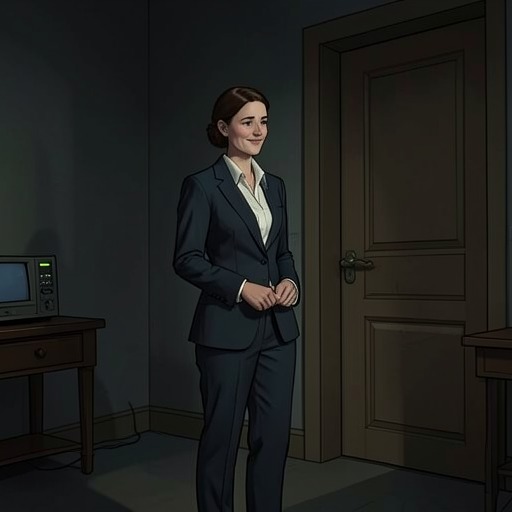
Zara presents the idea during a conversation with Jim and describes it as a use for the money earned by people who succeed. Her answer is not a conventional account of luxury or accumulation: “I buy distance from other people.” The psychologist, hearing the response, has never encountered that formulation before. Zara explains it through spaces designed to keep their occupants apart: expensive restaurants leave larger gaps between tables; first class on airplanes has no middle seats; exclusive hotels provide separate entrances for guests staying in suites. In densely populated places, she says, distance is the most expensive thing a person can buy.
The examples turn wealth into spatial privilege. Money does not merely provide a better seat or a more exclusive room; it changes the amount of contact a person must accept. Zara’s formulation is striking because it describes affluence as a means of controlling access to oneself. The distance is valuable precisely because other people are nearby, and because wealth can make their nearness optional.
The purchaser and the observer
Zara’s account of separation sits alongside an unusually close interest in people whose lives differ from her own. She tells Jim that people in his socio-economic bracket interest her: she has gone to apartment viewings, then to more of them, and likens the attraction to heroin, something that can inspire disgust while remaining difficult to give up. She compares the spectators’ position to children catching baby birds in glass jars. The image is not of ordinary sociability. It suggests a fascinated, unequal observation in which the people being watched do not necessarily share the watcher’s security or control.
That tension complicates Zara’s claim to prefer distance. She avoids eye contact and handshakes, and the psychologist regards her as markedly challenged in empathy; Zara also works as an analyst in a field where colleagues are commonly economists. Yet she repeatedly seeks out apartment viewings involving people who earn far less than she does. The text places her wish to keep others at a distance beside her compulsion to look into how they live. Her wealth affords separation, but it does not extinguish her curiosity about lives beyond the protected spaces she can buy.
Housing insecurity as the counter-image
The bank robber’s circumstances show what distance means when it cannot be purchased. After the marriage ends, the apartment remains in the other parent’s name. The bank robber does not want to make a fuss, but the consequences are material: without a job or savings, she has little chance of finding housing. The narrator stresses that a person does not put their name on a public-housing list while married with children and a life, because losing that life in an afternoon has not seemed possible. Divorce takes not only the past effort invested in a relationship but also the future plans built around it.
Buying is ruled out by the bank, which will not lend to someone without money. Renting offers no easy alternative: a tenant without a job must provide four months’ rent as a deposit. When a small sublet becomes available near the apartment where her daughters live, by the bridge, the bank robber pays six thousand five hundred a month. The arrangement is already precarious, passing from one subtenant to another. She empties her account, sells what she owns, and manages a month; then she cannot manage another. The distance between her and her children is not a chosen retreat but the consequence of being unable to secure a place to live.
The price of a single month
The pressure compounds rather than resolving. The bank robber finds work, but the first month’s wages are withheld until she has worked two months. The bank refuses her request for a loan because the job is not permanent. Meanwhile, a lawyer’s letter threatens an application for sole custody on the ground that a parent without a home or job cannot provide a tenable situation for the children. The bank robber’s attempts to avoid conflict and keep her daughters from living between parents at war leave her trying to solve the crisis alone; the institutions she approaches, or fears approaching, offer no immediate bridge across it.
On the day before New Year’s Eve, the lawyer’s letter and a notice threatening eviction are together in her pocket. The amount she needs from the bank is exact: six thousand five hundred kronor, the rent for the month she believes will give her time to find work and keep her children from being taken away. When Jim later asks why she attempted the robbery, she explains that she needed the rent because her husband’s lawyer was threatening to take the girls if she had nowhere to live. Jim grasps the human scale of the amount: six thousand five hundred, because she believed she might otherwise lose her children.
Distance, choice, and consequence
Zara’s phrase gains its force from the difference between purchased distance and imposed separation. At one end are gaps between restaurant tables, a first-class seat without a middle seat, and a private hotel entrance. At the other is a parent pushed out of the home, unable to meet a deposit or bridge a delay in wages, and afraid that seeking help might cost her custody. The first kind of distance protects a person from proximity; the second strips a person of the ability to remain close to those she loves.
The contrast does not make Zara’s statement false; it reveals its limits. In her account, distance is an expensive amenity in crowded places. In the bank robber’s story, housing and money govern whether family closeness can be sustained at all. Jim’s response to her explanation is physical as well as moral: he grips the handrail to keep himself from collapsing, and empathy feels to him like vertigo. The idea of distance therefore links a polished description of privilege to the consequences of poverty. It marks the unequal power not simply to be apart, but to decide when separation happens.